Case Study
The Blueprint Initiative: Building product understanding across an entire company
I designed and ran a company-wide programme that put almost every employee through the process of understanding, building, positioning and presenting a real Webfuse use case.
- Enablement & Leadership
- Product & Market
- Communication
The Problem
Webfuse gave us a much bigger product surface than Surfly had before.
Surfly had mainly used our middleware technology for co-browsing. Webfuse opened it up as a broader platform for modifying, automating and extending web applications.
That created a lot more possible use cases, but it also meant nobody really had the full picture.
Engineering knew what was technically possible. Sales knew what customers were asking for. Marketing knew how we were trying to position it.
Those things needed to meet.
Why It Mattered
It is difficult to sell, market or build the right thing if everyone is working from a different understanding of the product.
Sales needed enough technical depth to know whether an idea was actually achievable. Engineers needed more context on the customer problem behind what they were building. Marketing needed enough of both to avoid oversimplifying the product.
The gaps showed up in practical ways: weaker positioning, use cases that sounded good but did not hold up technically, and product ideas that lacked enough market context.
The Insight
I didn't think another round of internal training would fix it.
People needed to build something.
The idea behind Blueprint was to push people outside their normal job for a while.
A developer might be comfortable building a use case, but would also have to work out who it was for, why anyone would care and how to present it. Someone from Sales might understand the customer problem, but would have to configure Webfuse and understand how the solution actually worked.
The point wasn't to turn Sales into engineers or engineers into marketers. It was to get everyone far enough outside their own lane that they understood the rest of the process.
What I Did
The CEO had the idea of getting people to present Webfuse use cases to the company each week. I turned that into the Blueprint programme and ran it from beginning to end.
Around 40 people took part across Engineering, Sales, Marketing, Support, Operations and other functions.
Everyone got a Webfuse use case and had to work through the same basic process:
- Understand the use case
- Build it with Webfuse
- Work out the ICP, market context and pitch
- Record a demonstration video
- Create the supporting use-case and promotional material
- Present it to the company
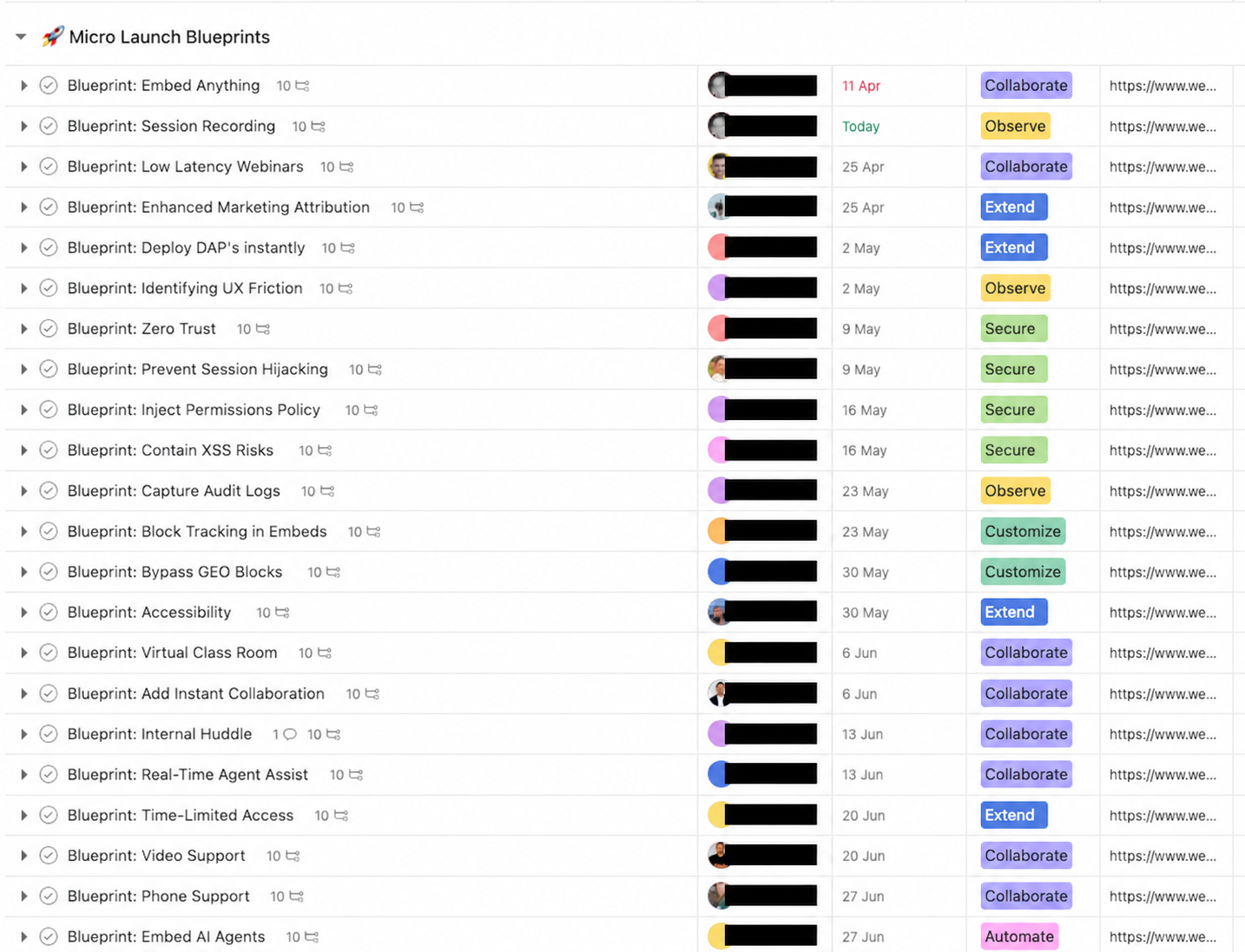
I built the tracking system around the programme, assigning owners and use cases, scheduling the weekly presentations and keeping everything moving across Q2 and Q3.
Each person also had their own task list so the process was clear without being too rigid.
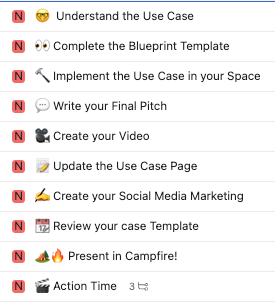
I worked one-to-one with every participant.
That looked different depending on who I was working with. With developers, I often learned more about the underlying technology from them while we worked through the ICP, positioning and commercial case. With commercial colleagues, I could bring more of the market context while helping them understand and configure the technology.
I also helped troubleshoot implementations, rehearse presentations, record videos and simplify technical areas when somebody was well outside their usual role.
The useful bit was that people couldn't stay inside their normal job.
Keeping the Quality High
With almost the whole company involved, I didn't want Blueprint to become something people completed just to tick a box.
I created a weighted scoring system covering the quality of the Blueprint, ICP fit, supporting material, video, effort and learning, and creativity.
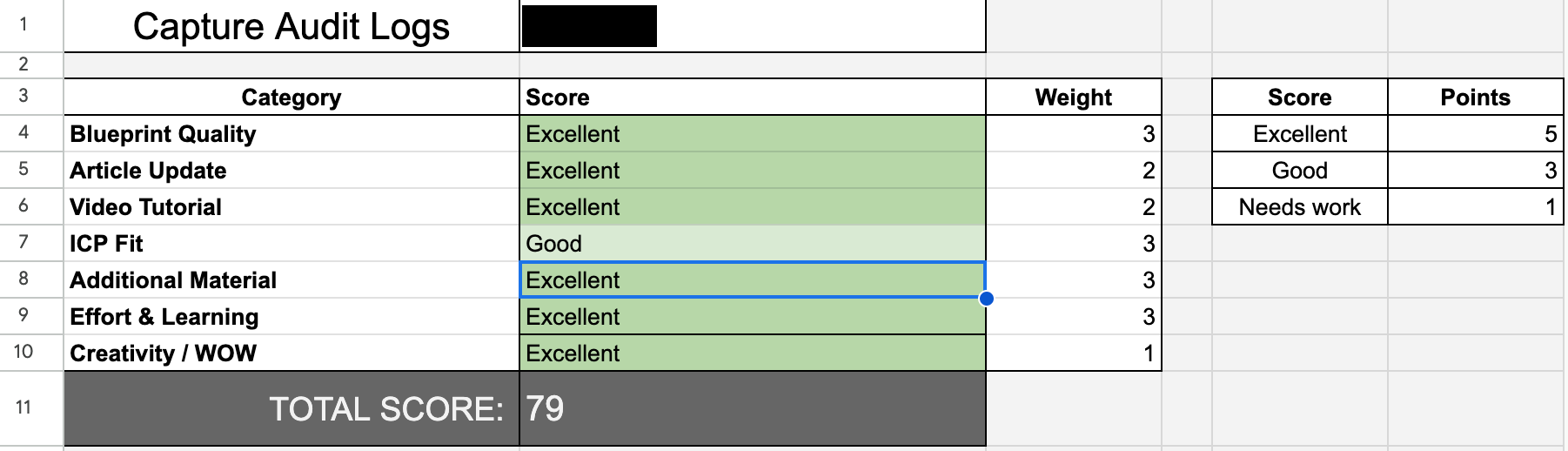
The strongest Blueprints won cash prizes and physical trophies at our company offsite.
That sounds slightly ridiculous, but it worked. People took it seriously and put real effort into the final result.
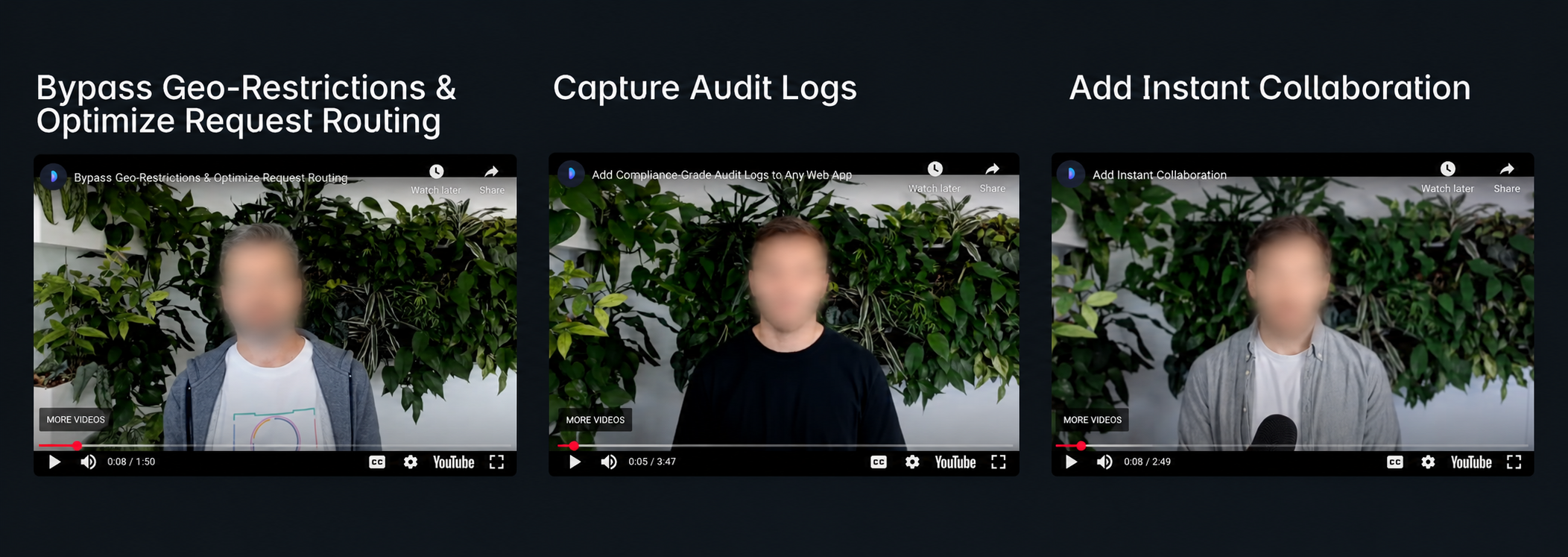
The outputs were useful too. We ended up with demonstration videos, articles, Webfuse configurations and reusable examples that could be used after the internal presentation was over.
How It Worked
The basic loop was:
Understand the problem → build it → work out who needs it → explain the value → create the collateral → present it → let the company challenge it.
Every presentation became a bit of a stress test.
Engineering would challenge the implementation. Sales would challenge whether the ICP made sense or whether the problem really existed in the market. Marketing would challenge how the idea was being positioned.
Sometimes that made the use case stronger. Sometimes it killed it. Both were useful.
It also meant almost the entire company was actively building with Webfuse.
That surfaced bugs, rough edges and missing capabilities simply because more people were trying to use the product in ways they normally wouldn't. I could then bring that feedback into the product process with the CEO.
Impact
Blueprint ended up producing a lot more than internal training.
Some of the technical builds became reusable Webfuse templates, including examples I later used in our sales demo infrastructure. Videos and articles became customer-facing content. The hands-on work surfaced bugs and missing capabilities for Product.
The programme also made later conversations easier because people had more of the same context.
Months afterwards, Blueprints and the people who built them were still being referenced in discussions. Commercial teams had a better understanding of the technical side. Technical teams had more context on the problems Sales was hearing from customers.
That made it easier to have useful conversations about what we should build, who we should build it for and why.
Successful delivery of Blueprint was also one of the agreed milestones toward my promotion to Lead Solutions Engineer / Product Market Strategy.
From there, I took formal responsibility alongside the CEO for helping close the feedback loop between Sales and Product.
I wasn't the expert in every Blueprint and that was never the point. My job was to build the system, keep it moving and get the right people helping each other.